
Responsible Gaming at Melbet
Melbet is committed to providing a safe and controlled environment for all players in India. Gambling is intended to be an enjoyable activity, and maintaining that balance is a shared responsibility. The platform offers a range of tools designed to help users stay in control of their betting behaviour. Player wellbeing is a priority, and every user has access to resources that support informed and responsible play.
Basic Principles of Responsible Gaming
Every form of gambling carries an inherent risk of financial loss. No outcome is guaranteed, and no strategy can eliminate that risk entirely. Responsible gaming begins with accepting this reality and approaching betting as a form of entertainment, not as a source of income.
Players on Melbet are encouraged to set personal boundaries before they start playing. This includes deciding in advance how much time and money they are willing to spend. Sticking to those boundaries is the foundation of a healthy relationship with gambling.
The following principles support safer gambling habits:
- Treat gambling as leisure, not as a financial strategy;
- Set a fixed budget for each session and do not exceed it;
- Avoid chasing losses, as this often leads to greater financial harm;
- Take regular breaks to maintain a clear perspective;
- Keep track of time spent on gambling activities;
- Never gamble under the influence of alcohol, strong emotions, or stress;
- Balance gambling with other recreational activities;
- Only use disposable income for betting, never funds needed for essential expenses.
Recognising the Warning Signs of Betting Addiction
Gambling addiction is a recognised psychological condition that can develop gradually. Being aware of the early signs is an important step toward seeking timely support.
The following indicators may suggest that gambling habits have become problematic:
- Spending more money or time gambling than originally planned;
- Feeling restless or irritable when attempting to cut back on betting;
- Repeatedly trying and failing to control or stop gambling;
- Using gambling to escape personal problems, anxiety, or low mood;
- Lying to family members, friends, or colleagues about gambling activity;
- Borrowing money or selling personal belongings to fund betting;
- Neglecting professional, academic, or family responsibilities due to gambling;
- Experiencing persistent thoughts about betting even when not actively playing;
- Continuing to gamble despite significant financial or personal consequences;
- Relying on others to help cover financial losses caused by gambling.
If several of these signs are present, it is advisable to seek professional help without delay. Addiction is a medical condition, not a character flaw, and effective support is available.
Practical Steps for Addressing Betting Addiction
Combating gambling addiction requires consistent effort and the right support systems. There are several practical measures that can help users regain control over their betting behaviour.
The following recommendations can assist in preventing or managing gambling addiction:
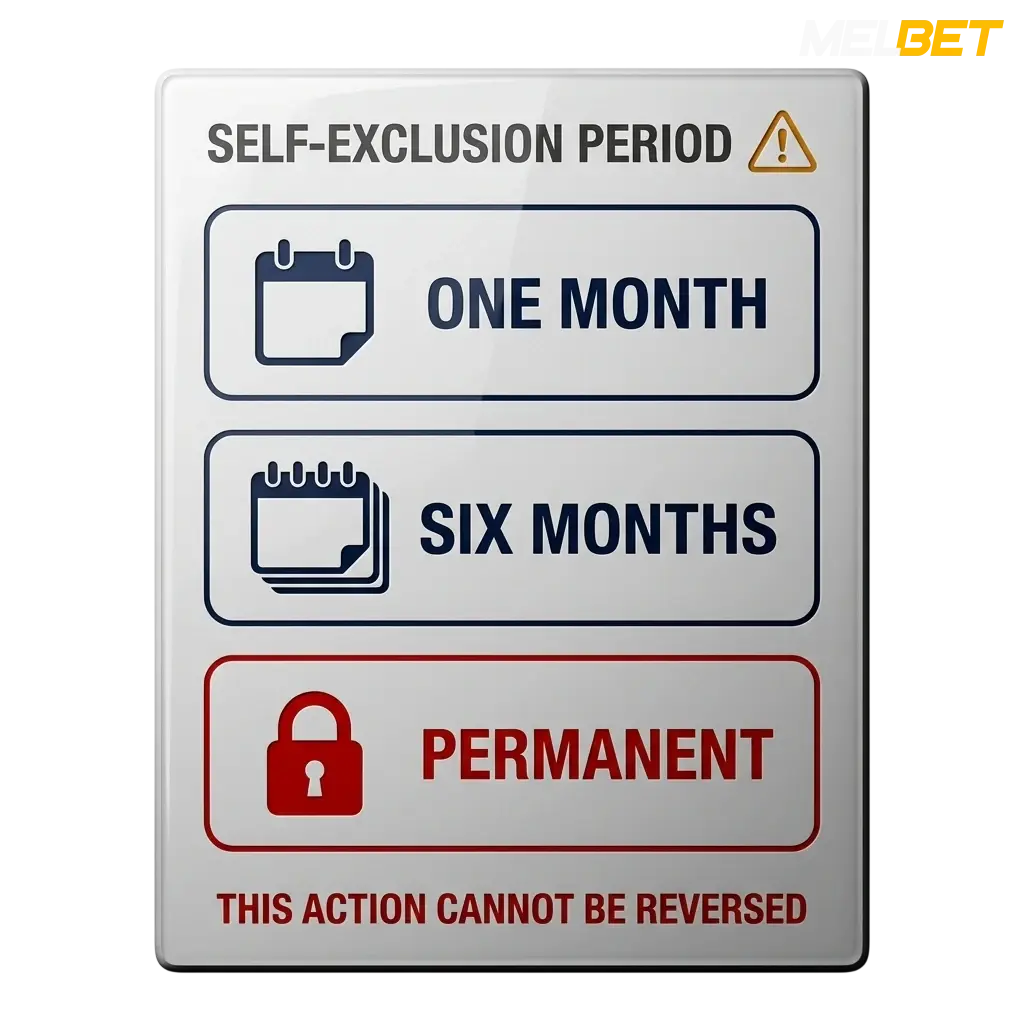
- Use the self-exclusion tools available through the platform to temporarily or permanently restrict access to your account;
- Set strict deposit, loss, and session time limits directly in your account settings;
- Reach out to a qualified mental health professional or addiction counsellor;
- Inform a trusted person, such as a family member or close friend, about your situation so they can provide accountability;
- Remove saved payment methods and avoid keeping large balances in your account;
- Install third-party gambling blocking software on your devices;
- Identify and avoid personal triggers that lead to compulsive gambling episodes;
- Replace gambling sessions with alternative activities such as exercise, hobbies, or social interactions;
- Join a peer support group for individuals affected by gambling addiction;
- Contact Melbet customer support to request account restrictions or a full self-exclusion.
Resources for Getting Help in India
No one dealing with gambling addiction needs to manage it alone. Professional and community support is available across India for those affected by problem gambling.
The following organisations provide assistance for gambling-related concerns:
- iCall (Tata Institute of Social Sciences): A counselling and mental health support service available across India. Website: icallhelpline.org;
- Vandrevala Foundation Helpline: Provides 24/7 mental health support, including addiction counselling. Helpline: 1860-2662-345. Website: vandrevalafoundation.com;
- NIMHANS (National Institute of Mental Health and Neuro Sciences): A premier institution in Bengaluru offering addiction treatment and mental health services. Website: nimhans.ac.in;
- Gamblers Anonymous India: A fellowship programme for individuals struggling with compulsive gambling. Website: gamblersanonymous.org;
- Snehi India: A non-profit offering emotional and psychological support. Helpline: +91-44-24640050. Website: snehi.org;
- Parivarthan Counselling: Offers individual counselling services for addiction and mental health. Website: parivarthan.org.
Contacting Melbet Support for Responsible Gaming Assistance
Users who believe their gambling behaviour may be causing harm are encouraged to contact Melbet support directly. The support team can assist with account restrictions, self-exclusion requests, and guidance on available responsible gaming tools.
The following channels are available for reaching Melbet support in India:
- Live Chat: Available directly on the Melbet website, 24 hours a day, 7 days a week;
- Email: Users may send their request to the official Melbet support email address listed in the platform's contact section;
- Phone Support: A dedicated helpline number is accessible via the Melbet website for users in India;
- Telegram: Melbet maintains an official Telegram support channel for quick assistance;
- Help Centre: A detailed FAQ and self-service section is available on the Melbet website, covering responsible gaming policies and account management options.
Updated: